
Advertisements
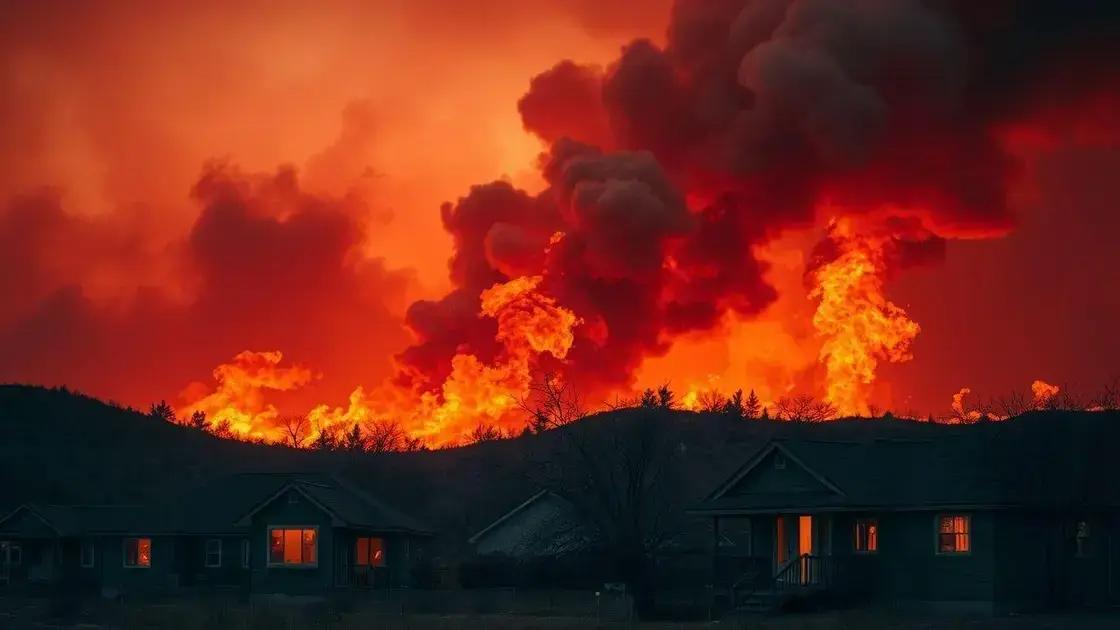
Uninsurable markets wildfires are pushing entire communities to the edge, where coverage ends and uncertainty begins. With wildfires growing in frequency and intensity, traditional insurance models are struggling to keep up.
This shift leaves thousands exposed, as providers pull out of high-risk zones or raise premiums beyond affordability. For many, the idea of being uninsurable is no longer hypothetical, it’s reality.
What does it mean to live in a place where protection is no longer guaranteed? The answer could impact not just homeowners, but the future of climate resilience itself.
Advertisements
Understanding uninsurable markets
Uninsurable markets wildfires are no longer a distant threat, they’re an urgent reality redefining how we think about coverage.
These markets emerge when insurers refuse or withdraw protection due to uncontrollable risks, especially those intensified by climate events.
In wildfire-prone areas, traditional insurance models are breaking down under the weight of escalating losses.
Wildfires, in particular, have become both more intense and more unpredictable due to rising global temperatures, prolonged droughts, and extreme wind patterns.
This new normal has made it difficult for insurers to accurately calculate premiums or maintain profitability. What was once a seasonal threat has now become a year-round risk, rendering vast regions functionally uninsurable.
The Nature of Uninsurable Markets
Uninsurable markets are born where the risk consistently outweighs the insurer’s ability to price coverage sustainably. In the case of wildfires, entire counties in states like California have witnessed insurance giants pull out completely.
The growing volatility of climate-related disasters complicates risk modeling, especially when wildfires jump firebreaks and move unpredictably through urban-wildland interfaces.
Insurers depend on historical data and predictable patterns to design their products. However, with the climate crisis disrupting all norms, models fail.
In areas repeatedly scorched by megafires, the cost of rebuilding far exceeds the premiums collected, leading companies to either deny coverage, drastically raise rates, or exit the market altogether.
These conditions force communities and businesses to operate without a crucial financial safety net.
Implications for Businesses
For companies operating in wildfire-exposed regions, uninsurable markets wildfires present a dual threat: direct physical loss and the inability to transfer that risk.
Without access to insurance, businesses face pressure from investors, lose creditworthiness, and become vulnerable to shutdowns after a single disaster event. The consequences ripple across local economies and supply chains.
To remain viable, businesses must adapt by rethinking resilience. That includes investing in fireproof infrastructure, leveraging satellite and sensor data for real-time risk tracking, and collaborating with local governments to improve land use and vegetation management.
Alternative financial instruments like catastrophe bonds or self-insurance funds are becoming more common in these high-risk zones.
Impact of wildfires on insurance availability
The impact of wildfires on insurance availability is profound and complex. As wildfires become more frequent and severe, many insurers are reevaluating their coverage options.
Historically, areas that experienced only occasional fires had access to various insurance products. However, as the risks have escalated, some insurance companies have begun to withdraw from these markets entirely.
This leaves homeowners and businesses in vulnerable regions searching for alternatives.
Changing Insurance Landscape
Insurers are now focusing on data-driven assessments of risk, which have shifted dramatically due to climate change and other factors. Understanding these changes can help consumers navigate their options better.
- Increased premiums for at-risk properties
- Restricting coverage options for fire-prone areas
- Higher deductibles
- Improved risk assessments using technology
Policyholders face challenges as traditional models of risk assessment no longer apply. Insurers may identify areas as unsafe due to previous wildfire patterns, hampering access to affordable insurance.
Strategies for Homeowners and Businesses
Homeowners and businesses in these regions must adopt proactive measures. Enhancing property resilience can play a crucial role in securing insurance. Some strategies include:
- Implementing fire-resistant building materials
- Creating defensible spaces around properties
- Regular maintenance of vegetation
By taking these steps, property owners can demonstrate their commitment to reducing risk, making it more appealing for insurers to provide coverage.
As the climate continues to evolve, understanding the impact of wildfires on insurance availability is essential. Preparedness not only safeguards properties but also ensures that individuals and businesses can navigate the insurance landscape effectively.
Strategies for businesses in high-risk areas

Operating in regions affected by uninsurable markets wildfires presents a growing set of challenges for businesses.
As traditional insurance becomes scarce or prohibitively expensive, companies must find new ways to shield their operations from mounting risks.
The ability to adapt and proactively plan can determine not only survival, but also long-term competitiveness.
A key priority is to integrate robust risk management into the business model. Understanding local fire hazards, evaluating exposure, and identifying operational vulnerabilities are essential steps.
These assessments must go beyond compliance and evolve into a culture of preparedness that permeates every level of the organization.
Enhancing Resilience
In the context of wildfires, enhancing resilience means strengthening infrastructure, operations, and decision-making to withstand extreme events. This goes far beyond reactive measures.
Businesses must invest in structural adaptations like using fire-resistant construction materials, reinforcing supply chain redundancy, and maintaining defensible perimeters around facilities to reduce fuel loads and potential ignition points.
These investments not only reduce the risk of physical loss but can also help businesses qualify for niche insurance products or state-funded protection programs.
In some areas, companies that demonstrate strong mitigation efforts may benefit from community-based insurance pools or access to reinsurance alternatives not available to unprepared counterparts.
Business Continuity Planning
A comprehensive business continuity plan becomes indispensable when formal insurance is no longer a safety net. The goal is to ensure that essential functions can continue, or be rapidly restored, after a wildfire or other disaster.
This includes clear communication channels with employees and stakeholders, remote data access and backups, and detailed operational contingency protocols for supply chain, logistics, and customer service.
Regular drills, updates based on evolving fire maps, and integration with local emergency systems should be part of this plan.
In the age of uninsurable markets wildfires, continuity planning is no longer optional, it’s a core component of financial stability and brand reputation.
Engaging with the Community
Community engagement is another powerful strategy for navigating uninsurable environments.
Businesses that partner with local governments, fire departments, and environmental organizations gain access to early warning systems, public education initiatives, and cooperative fire prevention programs.
These partnerships also help improve public infrastructure and zoning regulations that reduce overall fire risk.
In high-risk regions, collective resilience has become a shared responsibility. By aligning with community efforts, businesses not only improve their own defenses but also strengthen the ecosystem in which they operate.
This collaborative mindset can unlock new funding opportunities, increase goodwill, and even influence regional policy changes favorable to sustainable growth.
Ultimately, adapting to uninsurable markets wildfires demands foresight, investment, and community integration.
While no strategy can eliminate risk entirely, these approaches empower businesses to operate with confidence in even the most volatile environments.
Emerging solutions for managing wildfire risks
Emerging solutions for managing wildfire risks are crucial for communities most affected by these disasters. As wildfires increasingly threaten various regions, innovative strategies are being developed to reduce their impact.
New technologies and practices are being adopted to help manage these risks effectively. One of the most promising approaches involves utilizing advanced data analytics and artificial intelligence.
These tools allow for better prediction and monitoring of wildfire conditions, enhancing preparedness.
Technological Innovations
New technologies play a vital role in wildfire management. Some notable innovations include:
- Remote sensing to monitor environmental conditions;
- AI models predicting fire behavior;
- Drones for real-time surveillance of fire fronts.
These technologies improve response times and provide critical information for effective firefighting efforts.
Community Engagement and Education
Community engagement is essential in managing wildfire risks. Educational programs can empower residents to take proactive measures. Some initiatives include:
- Workshops on wildfire preparedness;
- Creating community emergency plans;
- Promoting fire-safe landscaping techniques.
By educating the community, individuals become more aware and better equipped to handle wildfire threats.
Policy and Collaboration
Effective policies and collaboration among various stakeholders also play a significant role. Governments and organizations are forming partnerships to improve resource allocation and response strategies.
For example, shared resources for firefighting efforts can enhance capabilities and improve outcomes.
In addition, policy changes can encourage land management practices that reduce fire risks, such as controlled burns and thinning of overgrown areas. This holistic approach not only helps to manage current risks but also aids in creating healthier ecosystems.
Overall, the development of these emerging solutions for managing wildfire risks is vital for safeguarding communities and preserving natural resources.
By leveraging technology, engaging the community, and fostering collaboration, we can build a more resilient future in the face of increasing wildfire threats.
The future of insurance in fire-prone regions
The future of insurance in fire-prone regions is being shaped by the increasing occurrence of wildfires and the evolving landscape of risk management.
As climate change continues to drive more frequent and intense fires, insurers are adapting their policies to meet these new challenges.
Insurers are now focusing on innovative solutions to better assess and manage risks associated with wildfires.
Traditional methods may no longer be effective, and companies are investing in technology and data analytics to gain deeper insights into fire behavior and risk factors.
Data-Driven Approaches
Companies are utilizing advanced data analytics to enhance their risk assessment capabilities.
Technology plays a crucial role in managing the risks associated with uninsurable markets wildfires. One powerful tool is satellite imagery, which allows for real-time monitoring of wildfire activity and vegetation changes.
This immediate visibility helps businesses and emergency services respond faster and more accurately to emerging threats.
In parallel, machine learning models are being employed to predict fire behavior and spread patterns.
These systems analyze vast datasets, such as weather conditions, topography, and historical fire paths, to generate forecasts that support proactive decision-making and resource allocation.
Additionally, the integration of geographic information systems (GIS) enables comprehensive risk mapping.
By layering spatial data, businesses can visualize hazard zones, infrastructure vulnerability, and evacuation routes, enhancing both preparedness and strategic planning in wildfire-prone regions.
These tools empower insurers to make informed decisions about coverage and pricing, ensuring that policies are sustainable in the long run.
New Insurance Models
As the landscape changes, new insurance models are emerging. One notable trend is the introduction of parametric insurance.
This model pays out based on predefined conditions, such as the occurrence of a wildfire, rather than relying solely on loss estimates.
Additionally, insurers are exploring the concept of community-based insurance, which aims to spread the risk among a group. This can encourage collective action towards fire prevention and mitigation.
Regulatory Changes and Partnerships
Regulations are also evolving to support more resilient insurance practices. Collaboration between insurers and government agencies can lead to better land management and fire prevention strategies.
By prioritizing safety initiatives, communities can protect their assets while ensuring that coverage remains affordable.
Overall, the future of insurance in fire-prone regions relies on innovative strategies, community involvement, and proactive risk management.
As the industry adapts to the realities of climate change, policyholders must remain informed and engaged to secure the best possible coverage for their needs.
Did you like our content? Continue on our website and read more: Homeowners Insurance Crisis 2025.
FAQ – Frequently Asked Questions about Insurance in Fire-Prone Regions
What are some emerging technologies in wildfire risk management?
Emerging technologies include satellite monitoring, data analytics, and AI models that help in predicting fire behavior and assessing risks.
How does community engagement play a role in fire prevention?
Community engagement encourages residents to participate in fire preparedness initiatives and fosters collective action toward reducing wildfire risks.
What is parametric insurance?
Parametric insurance is a model that pays out based on predefined events, like a wildfire occurring, rather than relying solely on loss assessments.
Why is collaboration between insurers and local governments important?
Collaboration allows for better resource allocation and the development of effective fire prevention strategies that benefit both the community and insurers.