

Advertisements
Disaster coverage availability in the United States is becoming an urgent issue as extreme weather events and natural catastrophes increase in frequency. Many households discover gaps in protection only after facing devastating losses.
But how can you ensure your home, business, and belongings are truly safeguarded when disaster strikes? Understanding the landscape of coverage and knowing what policies do, and do not, include is more important than ever.
Advertisements
Understanding disaster coverage types
A clear understanding of the different Disaster coverage types is essential in today’s climate, where extreme weather events and natural catastrophes are becoming more frequent and more costly.
Policies are not one-size-fits-all; instead, they target specific risks, and failing to identify the right type can leave families and businesses exposed.
As climate change intensifies hurricanes, floods, and wildfires, recognizing how each coverage works helps ensure both financial security and peace of mind.
Main types of Disaster coverage
- Homeowners Insurance: This remains the foundation of protection, covering fire, theft, and some natural events. However, many policies exclude disasters linked to climate change, such as floods or hurricanes, unless specifically added.
- Flood Insurance: Rising sea levels and heavier rainfall make this coverage indispensable, especially in coastal or river-adjacent areas. Standard homeowners policies rarely include it, making separate enrollment critical.
- Earthquake Insurance: In seismic regions, even moderate tremors can cause major structural damage. This additional coverage provides financial support where traditional policies fall short.
- Business Interruption Insurance: For businesses, this type is vital as it covers lost income and operational expenses after a disaster, helping companies resume activity and maintain staff payroll.
Together, these types of Disaster coverage create a layered safety net that adapts to different threats. Choosing the right combination depends on your location, the type of property you own, and the risks tied to your community.
Evaluating and updating your coverage
When deciding what protections are necessary, three factors stand out:
- Geographic risk: Homes in hurricane zones, floodplains, or wildfire-prone regions demand tailored coverage.
- Asset value: Both property structure and personal belongings should be accurately assessed to avoid underinsurance.
- Financial resilience: Understanding how much loss you could absorb without insurance helps determine coverage limits.
Reports indicate that as disasters become more frequent, insurers are tightening their policies and raising costs. This reality makes it crucial to review and update your Disaster coverage regularly.
A proactive approach ensures that exclusions, limits, and endorsements reflect today’s risks rather than yesterday’s conditions, protecting both your home and your financial stability.
How to assess your needs for disaster coverage

When it comes to choosing the right level of Disaster coverage, one of the most important steps is to carefully evaluate your personal circumstances and the environment in which you live.
Many households only realize gaps in their policies after a catastrophe, which can lead to devastating financial consequences.
A thorough assessment allows you to anticipate risks, measure potential losses, and select insurance that aligns with your reality.
Identifying risk factors
The first step is to analyze the risks inherent to your location. Geography plays a central role in determining which types of Disaster coverage are most urgent.
Living in a floodplain or a coastal region increases the likelihood of water-related damages, while homes near seismic fault lines carry the constant threat of earthquakes.
Weather patterns also matter: areas regularly exposed to hurricanes, wildfires, or tornadoes require tailored protection.
Even the condition and age of your property influence how vulnerable it may be to damage, making these evaluations crucial for defining the right coverage strategy.
Evaluating the value of your assets
Assessing your assets is equally essential to ensure that your Disaster coverage limits are sufficient for a complete recovery.
It is not only about the replacement value of your home but also about everything inside it, from electronics and appliances to furniture, jewelry, and vehicles.
Many homeowners underestimate the true worth of their belongings, leaving themselves underinsured when disaster strikes.
By establishing a realistic inventory and calculating the replacement costs, you gain clarity on the level of protection required and can avoid the financial burden of uncovered losses.
Consulting with insurance experts
While self-assessment is a strong starting point, speaking with professionals adds an extra layer of security.
Insurance experts can help interpret the often complex language of policies, clarify exclusions, and highlight the endorsements that may be necessary to close gaps.
For instance, adding protection against sewer backups or utility service interruptions may not seem urgent until you experience a disaster that standard policies do not cover.
With professional guidance, you ensure your Disaster coverage reflects both present risks and future uncertainties, giving you peace of mind that your assets and family are adequately protected.
By methodically identifying risks, valuing your assets, and consulting with experts, you take proactive steps toward creating a comprehensive Disaster coverage plan.
This preparation is the foundation for resilience, ensuring that when unexpected events occur, you are financially equipped to recover and rebuild.
Key providers of disaster insurance in the US

Choosing the right insurer is one of the most important steps in securing reliable Disaster coverage.
Providers differ not only in pricing but also in their ability to respond quickly to claims, their expertise in handling specific risks, and the flexibility of their policies.
Understanding the strengths of both national and regional insurers helps consumers make informed decisions.
National insurance providers
Large companies dominate the market for Disaster coverage in the United States, offering policies with broad reach and strong financial backing.
State Farm, for example, is recognized for its extensive homeowners insurance and the option to add earthquake or flood protection.
Allstate specializes in comprehensive plans for homes in at-risk areas, often including features designed for hurricane or wildfire exposure.
Farmers Insurance allows clients to customize policies, adding endorsements that address local risks.
Meanwhile, USAA focuses on military members and their families, delivering competitive rates and specialized Disaster coverage that adapts to their unique needs.
These national players bring stability and resources, making them a trusted choice for millions of households.
Regional and local providers
Beyond the national leaders, regional insurers play a critical role in the landscape of Disaster coverage.
Their greatest advantage is local expertise: a company operating in California may have stronger earthquake policies, while those based in the Gulf Coast often emphasize flood and hurricane protection.
Because they understand local risks in detail, these providers can craft policies that are more tailored to the realities of specific communities.
They also tend to offer more personalized customer service, and in many cases, more competitive pricing than national companies. For policyholders, this can mean faster claims resolution and a more supportive experience during recovery.
Finding the right balance
When comparing providers, the key is to balance the financial stability of large national companies with the local knowledge of regional insurers.
Bundling services, such as auto or life insurance, can reduce costs, but equally important is checking policy exclusions, endorsements, and customer reviews to measure reliability.
A proactive consumer should request multiple quotes, ask detailed questions about claims processes, and ensure that the chosen provider has a strong track record in managing large-scale disasters.
By carefully weighing both national and regional options, consumers can secure Disaster coverage that not only protects property but also provides confidence that, when disaster strikes, the support will be there when it is needed most.
Common gaps in disaster coverage
Even with policies in place, many households in the United States discover too late that their Disaster coverage does not fully protect them.
Rising climate-related risks, combined with increasingly restrictive insurance markets, mean that gaps in coverage are more common than most people realize.
Understanding these shortcomings is crucial to avoid devastating out-of-pocket costs after a catastrophic event.
Exclusions that leave homeowners exposed
One of the most significant gaps in Disaster coverage comes from exclusions written into standard policies.
Flooding, for example, is almost never included in a basic homeowners plan and must be purchased separately through the National Flood Insurance Program.
Earthquake protection is another exclusion, even in regions highly vulnerable to seismic activity. Wildfire risks, which are growing in parts of California and the West, are sometimes subject to high deductibles or restricted availability.
These exclusions leave many families falsely confident in their coverage until disaster strikes.
Insufficient coverage limits
Another widespread issue is underinsurance. Homeowners often underestimate the cost of rebuilding a house or replacing belongings, resulting in Disaster coverage limits that fall far below actual needs.
Reports highlight cases where families insured their homes for values that were 20% to 30% below reconstruction costs. As climate change drives more intense storms and damages increase, this gap has become even more problematic.
The failure to update policies regularly with inflation and rising construction costs contributes significantly to financial vulnerability.
Missing endorsements and overlooked protections
Endorsements, add-ons to standard insurance, are often overlooked, but they can close important gaps in Disaster coverage.
Sewer backup, utility service interruption, or coverage for temporary living expenses during home repairs can make a major difference in recovery.
Without these provisions, families may face substantial unexpected costs that standard policies do not reimburse.
In high-risk states, insurers are also withdrawing from certain markets, making it harder for homeowners to secure these critical endorsements at all.
By recognizing these common gaps, consumers can take proactive steps to secure more comprehensive Disaster coverage.
Regularly reviewing policies, reassessing property values, and discussing additional endorsements with insurers are vital practices.
In an era of escalating climate disasters and insurance instability, closing these gaps is not just about financial protection, it is about ensuring resilience and stability for households facing an uncertain future.
Navigating claims after a disaster
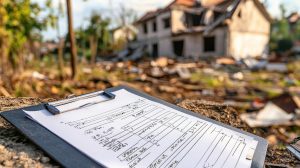
Filing a claim after a catastrophe is one of the most stressful moments for any homeowner or business owner.
While Disaster coverage is designed to provide financial relief, the process of accessing those benefits can be complicated and overwhelming. Understanding each step in advance helps reduce confusion and increases the likelihood of a smooth recovery.
Understanding your policy before filing
The first step in navigating claims is to thoroughly understand your Disaster coverage policy. Every contract has limits, deductibles, and exclusions that determine what losses will be reimbursed.
For example, a homeowners policy may cover wind damage from a hurricane but exclude flood-related losses, requiring separate protection. Knowing these details in advance helps set realistic expectations and prevents delays when submitting a claim.
Documenting the damage with precision
Evidence is critical in proving your losses. After a disaster, policyholders should document the damage as quickly and thoroughly as possible. Photos, videos, receipts, and even drone footage in some cases can serve as vital proof.
This documentation should cover both structural damage and personal property, as well as environmental factors like water levels or fire spread.
Strong evidence strengthens your case and reduces disputes with adjusters over the extent of coverage.
Communicating with insurers and adjusters
Once a claim is filed, communication with your insurance company becomes the centerpiece of the process. Claims adjusters are assigned to evaluate losses, and their reports directly influence how much compensation you will receive.
Being proactive, responding quickly to requests, providing additional documents, and keeping records of all interactions, ensures transparency.
Honesty about the scope of damage is essential, but so is persistence: policyholders who stay organized and engaged tend to navigate Disaster coverage claims more successfully.
Overcoming common obstacles
Even with preparation, challenges are common. High volumes of claims after major disasters can delay payouts for months. Policy exclusions may lead to disputes, and underinsurance can leave families facing large uncovered expenses.
Some insurers have been withdrawing from high-risk areas altogether, complicating the claims process further.
Staying informed about your rights, consulting with independent claims experts if necessary, and keeping detailed records can help overcome these hurdles.
Navigating claims after a disaster is rarely simple, but by combining knowledge of your Disaster coverage policy, meticulous documentation, and consistent communication, you increase your chances of a fair settlement.
In times of crisis, preparation and persistence are the keys to turning coverage into actual financial protection.
Conclusion: preparing for a future shaped by Disaster coverage
The importance of Disaster coverage in the United States is growing as climate-driven events become more frequent and severe.
Beyond protecting individual homes and businesses, it now represents a broader challenge for the financial stability of entire communities.
Rising premiums, reduced policy availability in high-risk zones, and the strain on insurers are reshaping how Americans think about disaster protection.
According to research from American Progress, the property insurance market is under severe pressure due to climate change, forcing policymakers to rethink how Disaster coverage can remain sustainable and equitable.
At the same time, NPR reports that families across the country are already struggling with soaring costs, sometimes being priced out of the protection they desperately need.
These realities underline that disaster preparedness is no longer optional,it is a necessity.
For consumers, the next step is to stay proactive: regularly assess personal risks, review policy exclusions, and update coverage to match rising replacement costs.
For insurers and governments, the challenge lies in innovating new models that ensure Disaster coverage is both affordable and widely available.
Balancing these needs is critical to securing not only financial resilience but also social stability in the face of intensifying natural disasters.
Ultimately, investing in robust Disaster coverage today is about more than protecting property, it is about safeguarding families, communities, and the future of economic security in an era defined by uncertainty.
FAQ – Frequently Asked Questions about Disaster Coverage
What types of disasters does homeowners insurance typically cover?
Homeowners insurance usually covers damages from events like fire, vandalism, and certain natural disasters, but it often excludes floods and earthquakes.
How can I assess my disaster coverage needs?
Assess your coverage needs by identifying risks in your area, evaluating your assets, and considering your financial situation to determine how much coverage you’ll need.
What documents are necessary for filing a disaster insurance claim?
You should have documentation of the damage, such as photos and videos, along with your insurance policy details and receipts for any damaged items.
How do I communicate effectively with my insurance adjuster?
Be honest about the damage, provide any requested information promptly, and keep a detailed record of all your communications to ensure a smooth claims process.
Liked the article?