
Anúncios
Climate risk in home insurance pricing is no longer just a technical term, it’s a growing concern for millions of American homeowners. As wildfires, floods, and storms become more frequent, insurers are adjusting their rates to reflect the rising environmental risks.
What does this mean for your home? Premiums are climbing in areas once considered safe, and coverage can be harder to secure if your property is in a high-risk zone. The climate factor is now front and center in how insurance costs are calculated.
Navigating this new reality doesn’t have to be daunting. With the right knowledge and proactive steps, you can better understand your risk profile and explore ways to protect your home, without breaking the bank.
How Climate Risk Is Reshaping Home Insurance Pricing in the U.S.
Understanding climate risk in home insurance pricing is essential for today’s homeowners, especially as natural disasters become more frequent and severe.
From wildfires in California to flooding in the Midwest, environmental threats are no longer rare, and insurance companies are adjusting premiums accordingly. This shift is redefining how property risk is measured, priced, and covered.
What Exactly Is Climate Risk?
Climate risk refers to the growing financial threat posed by environmental hazards like hurricanes, wildfires, heatwaves, and rising sea levels. In the context of home insurance, it means evaluating how vulnerable a property is to these events.
For instance, areas historically considered “safe” are now experiencing record-breaking weather extremes, prompting a dramatic reassessment by insurers.
In the U.S., more than 39 million homes are located in regions with significant climate risk exposure, according to a recent study by the First Street Foundation.
Insurers factor in predictive climate models, FEMA flood zones, wildfire zones, and NOAA forecasts to estimate the likelihood of damage and set premium levels.
The Link Between Climate Risk and Insurance Pricing
Climate risk in home insurance pricing means that your premium is directly influenced by your property’s exposure to climate-related dangers.
Insurance companies use advanced modeling tools to assess local risks, including elevation, proximity to water or forests, historical claim data, and construction resilience.
In high-risk zones, this can result in sharp price increases or complete withdrawal of insurance offerings.
For example, in states like Florida and California, several major insurers, including State Farm and Allstate, have stopped issuing new policies or significantly reduced their coverage due to wildfire and hurricane risks.
As a result, homeowners are either paying double-digit premium hikes or turning to last-resort state-run programs like California’s FAIR Plan, which often offer limited coverage at higher costs.
These rising premiums aren’t just a financial burden; they’re creating ripple effects in the housing market.
A report from Redfin notes that homes in climate-risk zones are selling for up to 7% less than similar properties in lower-risk areas. In some regions, increasing insurance costs are even making mortgages harder to obtain or maintain.
Why understanding climate risk matters
Becoming aware of climate risk helps homeowners protect their investment. By selecting a home in a lower-risk area or making improvements to reduce vulnerability, homeowners can potentially lower their insurance costs.
Moreover, as the effects of climate change intensify, awareness can drive community efforts to address these challenges.
Communities that proactively work to reduce risks may attract better insurance rates in the long term. Always keep in mind that the better informed you are, the better you can safeguard your home and finances.
What Drives the Cost of Home Insurance in a Climate-Risk Era?
When it comes to climate risk in home insurance pricing, homeowners across the U.S. are experiencing a shift in how premiums are calculated. Gone are the days when location and home size alone determined costs.
Now, a combination of environmental, structural, and financial factors directly influence the cost of your home insurance. Understanding these factors is essential for those seeking home protection without breaking the bank.
The Growing Importance of Location and Environmental Exposure
The location of your property remains one of the most decisive variables.
However, in today’s climate context, it’s not just about zip code, it’s about exposure. Homes located in flood zones, wildfire-prone regions, or hurricane corridors face soaring insurance premiums.
For example, coastal areas in Florida and the wildfire belts of California have seen insurance costs spike by over 30% in the last two years, with some insurers pulling out entirely.
The rise in premiums is directly tied to climate-driven disasters.
According to the National Centers for Environmental Information, the U.S. experienced 28 separate billion-dollar weather events in 2023 alone, leading insurers to reassess how they price risk based on geography and forecast data.
How Your Home’s Features Influence Pricing
Your home’s structure and condition also play a central role in determining premiums. Older properties with outdated electrical or plumbing systems often face higher rates, especially if located in high-risk zones.
Meanwhile, newer homes built with climate-resilient materials or equipped with smart detection systems, like leak sensors or fire-resistant roofing, may receive discounts from insurers.
A recent report from the Insurance Information Institute notes that insurers are increasingly using property-level risk models, combining building age, construction material, and retrofitting status to price policies accurately.
As wildfires and floods become more common, homes that demonstrate proactive mitigation, such as elevated foundations or defensible space landscaping, may be favored by underwriters.
Your Claims and Credit History Matter More Than Ever
Climate risk has also amplified the importance of personal insurance behavior. Homeowners with multiple past claims, particularly weather-related ones, are considered high risk.
In fact, insurers like State Farm and Allstate have introduced stricter renewal policies or outright policy denials for repeat claimants in climate-sensitive zones.
Credit history continues to be a controversial but active pricing factor. A strong credit score often correlates with lower premiums, as studies suggest that financially responsible individuals file fewer claims.
Several states, including California and Maryland, are now reevaluating whether this model remains fair, especially as climate risk becomes a more dominant pricing influence.
Coverage Choices and Deductibles in a Risk-Based System
Finally, the level of coverage you choose significantly impacts your premium. Higher coverage limits, lower deductibles, and add-ons like flood or wildfire insurance, which are increasingly essential in the U.S., all increase your monthly costs.
Yet, with the rise of climate volatility, underinsuring your home can lead to severe financial consequences.
A recent MarketWatch article highlighted that homeowners in high-risk states are increasingly forced into state-backed plans with fewer protections, paying more for less coverage
How climate change impacts insurance policies
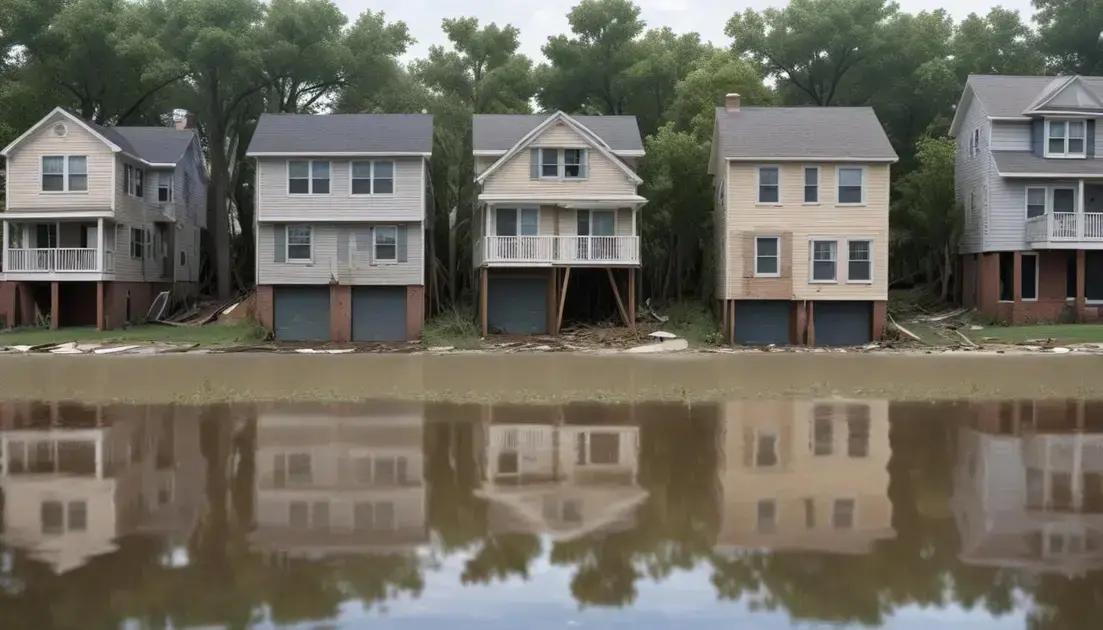
As climate events intensify across the United States, climate risk in home insurance pricing has emerged as a defining factor in how policies are structured, priced, and approved.
From California wildfires to Gulf Coast hurricanes, insurers are reassessing their models to address the growing threat.
For homeowners, this means navigating an evolving insurance landscape shaped by environmental instability and financial risk.
A Surge in Disasters Drives Premium Increases
The United States has witnessed a dramatic uptick in billion-dollar disasters, with 2023 recording 28 extreme weather events, including hurricanes, floods, and wildfires, according to NOAA.
These events have triggered unprecedented insurance losses. In response, companies have either raised premiums sharply or withdrawn entirely from high-risk regions.
For example, State Farm and Allstate have stopped issuing new home insurance policies in California, citing escalating wildfire risks and unsustainable claims.
In Florida, insurers are exiting due to hurricanes and rising sea levels, leading to a growing reliance on Citizens Property Insurance, the state’s insurer of last resort.
As disasters become more frequent, the financial burden on insurers grows, and that cost is passed down to consumers in the form of higher premiums and stricter conditions.
Climate-Based Risk Models Are Replacing Historical Norms
In the past, insurance pricing relied heavily on historical data. But with climate change reshaping weather patterns, past trends are no longer reliable predictors of future risk.
Insurers are turning to predictive climate models, satellite imagery, and localized forecasts to better evaluate exposure. This means that homes in areas once considered low-risk are being reclassified.
The FEMA Risk Rating 2.0, launched nationally in 2023, is one example.
It replaced outdated flood zone maps with more precise, individualized risk assessments, resulting in increased flood insurance rates for many coastal and inland communities.
The shift toward forward-looking risk analysis allows insurers to price policies more accurately, but it also exposes homeowners to unexpected cost spikes.
Climate Resilience Is Becoming a Pricing Factor
In response to these pressures, insurers are increasingly rewarding climate resilience.
Homes equipped with fire-resistant roofing, stormproof windows, elevated foundations, or improved drainage systems may qualify for premium reductions. This approach not only encourages mitigation efforts but also helps insurers reduce potential payouts.
According to the Insurance Institute for Business & Home Safety (IBHS), homes built to modern resilience standards can reduce property losses by up to 50% in certain disasters.
Programs like FEMA’s BRIC (Building Resilient Infrastructure and Communities) and state-level mitigation incentives provide funding to support homeowners in upgrading their properties to withstand climate events.
Some insurers now offer green rebuilding options and climate-specific riders, such as wildfire defense endorsements or broader flood coverage, even in areas previously considered outside flood zones.
As a result, climate risk in home insurance pricing no longer just reflects vulnerability, it also incorporates adaptation.
Evaluating your home against climate risks
Evaluating your home against climate risks is essential for protecting your investment and ensuring safety.
As climate change leads to more extreme weather events, assessing your home’s vulnerability becomes crucial.
Begin by conducting a risk assessment of your property. Identify potential threats such as floods, hurricanes, wildfires, and extreme heat.
Understanding which threats are most likely to affect your area helps you prioritize your home’s renovations and insurance needs.
Next, review local climate data. Many government and environmental organizations provide resources that detail historical weather patterns and projections for climate change impacts.
Use this information to inform your evaluation.
Analyze Home Features
Consider your home’s features and how they influence its vulnerability:
- Elevation in relation to flood zones;
- Roof materials and their ability to withstand storms;
- Windows and doors that provide optimal protection;
- Landscape features that manage water runoff.
Identifying weaknesses in these areas can help you make informed improvements.
Additionally, think about improvements you can make to increase resilience. Upgrading insulation or installing storm windows are examples of modifications that can reduce risk.
Assessing how well your home withstands climate-related pressures is key to this process.
For a comprehensive analysis, consider hiring a professional environmental consultant. They can identify vulnerabilities you might overlook and suggest personalized solutions to mitigate risks.
This investment can save money and stress in the long run.
Tips for lowering your insurance costs
In the current climate-driven insurance landscape, premiums are climbing steadily across the United States.
As climate risk in home insurance pricing becomes a major factor for insurers, many homeowners are feeling the financial pressure.
Thankfully, there are practical strategies that can help reduce your costs without compromising the quality of your coverage. Understanding these options can lead to long-term savings and greater resilience.
Increase Your Deductible Responsibly
Raising your deductible is one of the most straightforward ways to lower your monthly insurance premium. By agreeing to pay a higher amount out of pocket in the event of a claim, you reduce the risk for the insurer, and they reward you with a lower rate.
However, this decision should be made carefully. Evaluate your financial capacity to handle a higher deductible if a disaster strikes.
In high-risk areas, where climate-related events like flooding or wildfires are more likely, it’s essential to have emergency funds set aside to cover potential expenses if you choose this route.
Bundle Policies for Better Rates
Combining your home insurance with other forms of coverage, such as auto or life insurance, can result in substantial discounts.
Insurers often provide multi-policy bundles as an incentive to retain customers and manage risk more efficiently.
This approach not only simplifies your billing and customer service experience but can also save you hundreds of dollars annually.
In regions particularly affected by climate volatility, like Florida, Louisiana, or California, every discount counts, especially as private insurers become more selective in issuing policies.
Invest in Home Safety and Resilience
Improving the safety and durability of your home is not only a wise long-term investment but also a powerful way to reduce your insurance premiums.
Insurers are placing increasing emphasis on climate resilience, which means they reward homes that are better prepared to withstand natural disasters.
Installing reinforced roofing materials, impact-resistant windows, and wildfire defense systems (like ember-proof vents or defensible landscaping) can qualify you for significant savings.
Similarly, modernizing plumbing, updating electrical systems, and integrating smart security tools, such as surveillance cameras and smoke detectors, help prevent damage or loss and are often considered in risk assessments.
According to the Insurance Institute for Business & Home Safety (IBHS), homes that incorporate recommended climate mitigation features can experience a 40% to 60% reduction in potential damage during severe events.
Compare Multiple Insurers and Policies
Shopping around remains one of the most effective tools for lowering your insurance costs.
With climate risk in home insurance pricing leading to higher variability among providers, it’s crucial to compare multiple quotes and coverage details before making a decision.
Some insurers are exiting high-risk markets altogether, while others are offering niche coverage options or premium discounts to attract new customers.
Be sure to inquire about hidden fees, exclusions related to climate events, and whether flood or wildfire protection is included or must be purchased separately.
Online tools and independent agents can help you navigate this process efficiently. Also, review your policy regularly, especially after making any structural improvements or lifestyle changes that might reduce your risk profile.
FAQ – Frequently Asked Questions About Climate Risk and Home Insurance
How can climate change affect my home insurance premiums?
Climate change can lead to more frequent natural disasters, which increases the risk for insurers. As a result, premiums may rise to cover potential claims.
What steps can I take to lower my home insurance costs?
You can lower your costs by increasing your deductible, bundling policies, improving safety features, and shopping around for quotes.
Why is it important to evaluate my home against climate risks?
Evaluating your home helps identify vulnerabilities to climate-related threats, allowing you to make necessary improvements and protect your investment.
Are there discounts for homeowners who enhance their property’s safety features?
Yes, many insurers offer discounts for homes equipped with safety features like security systems, storm shutters, and fire-resistant materials.